Between 1965 and 1973, copper prices spiked dramatically and builders across the United States switched to aluminum for branch circuit wiring. East Tennessee was no exception. Many homes in Knoxville's older neighborhoods, in Maryville, in Oak Ridge's mid-century planned subdivisions, and in countless rural communities built during that window still have original aluminum branch wiring in the walls today.
If your home was built between 1965 and 1973, there is a meaningful chance you have aluminum branch wiring. This guide explains what that actually means for safety and resale, how to identify it without opening up walls, and the real-world cost of each of the three repair paths we offer East Tennessee homeowners in 2026.
What the actual risk is, and is not
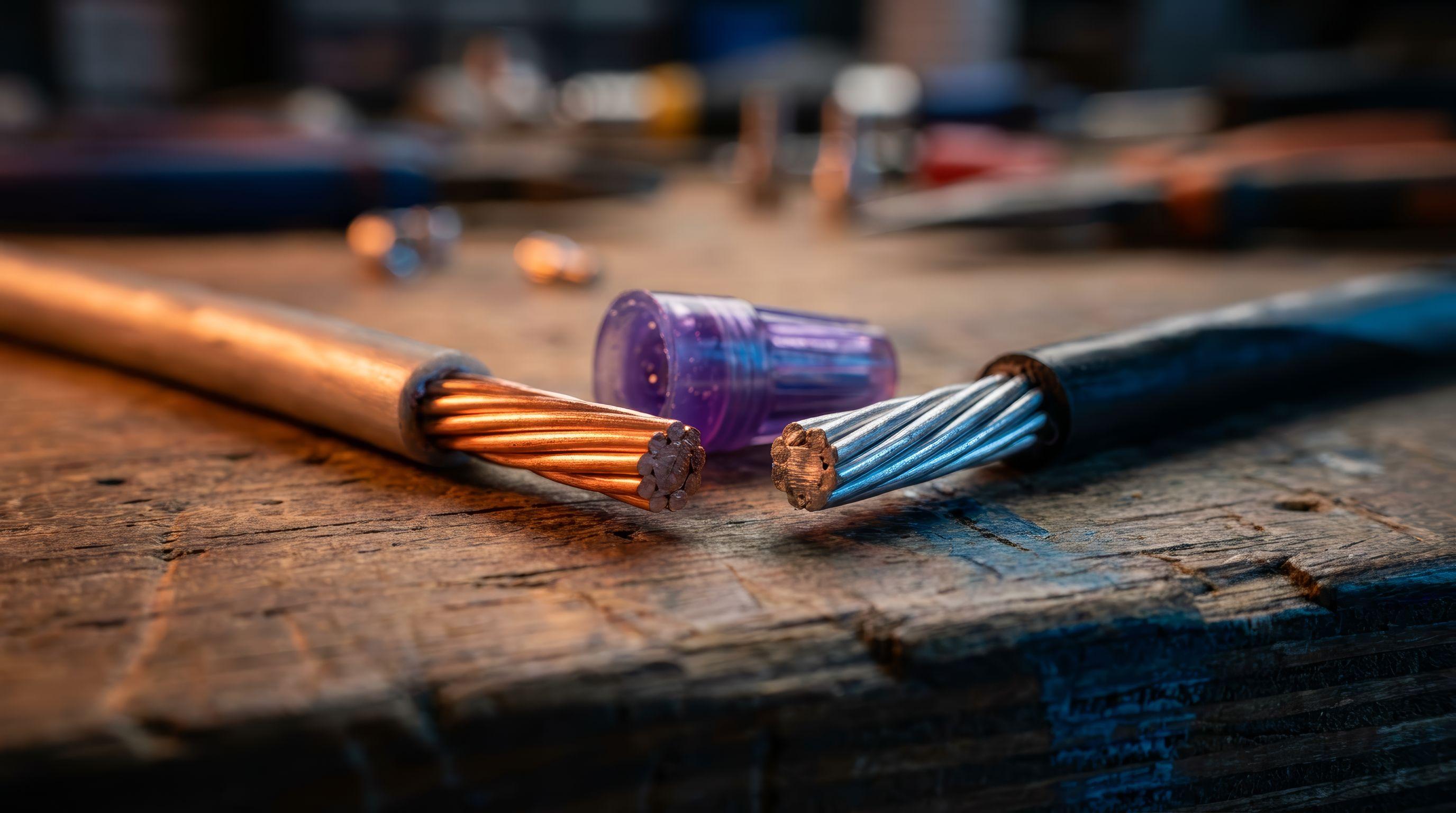
Aluminum wire by itself is not dangerous. The aluminum is what carries the current, and it does that perfectly well. The problem is everywhere the wire ends, where it connects to switches, outlets, splices in junction boxes, and the panel. Aluminum and copper have different rates of thermal expansion. Every time you switch on a high-draw appliance, the wire heats up and expands slightly. When you turn it off, it cools and contracts.
Over thousands of these cycles, an aluminum-to-device connection slowly loosens. Loose connections build resistance. Resistance generates heat. Heat eventually creates an electrical arc, and an arc can ignite the wood, insulation, or paper-jacketed wire nearby. The Consumer Product Safety Commission has documented that homes with aluminum branch wiring are roughly 55 times more likely to have at least one connection reach fire-hazard conditions than homes wired in copper.
Important distinction: aluminum service entrance wire, the large conductors coming from the utility meter into the panel, is normal and not the concern. Aluminum service entrance is the standard even in new construction. The issue is specifically aluminum on the smaller branch circuits running through the walls to outlets, switches, and ceiling fixtures.
How to check whether your East Tennessee home has aluminum branch wiring
There are three ways to check, in order of difficulty. The easiest is to look at the wires landing on breakers in your electrical panel. Open the panel cover (carefully, and ideally with the main breaker off). You will see solid conductors going to each breaker. If those conductors are silver-colored, about 1/8 inch in diameter for a 15A circuit, they are likely aluminum. Copper is reddish-orange and unmistakable once you have seen both.
Second method: pull off a switch or outlet cover plate (turn the breaker off first), unscrew the device from the wall box, and look at the wire as it enters the device. Same identification. Solid silver conductor with markings like "AL," "CU-CLAD ALUMINUM," or "15 AMP / 14 AWG AL" stamped on the wire jacket is aluminum.
Third method: have a licensed electrician do a 15-minute inspection. We open a sample of outlet and switch boxes, check the panel, and give you a definitive answer plus photographs of what we found. If you are listing your home or buying one built in that 1965-1973 window, this small inspection is worth doing before you sign anything.
Your three real repair options
Option one: live with it and inspect annually. If your aluminum wiring has not caused problems and all the connections are properly made (with aluminum-rated devices and anti-oxidant compound), code does technically allow it to remain. We do not recommend this option for most East Tennessee homes, especially homes you plan to sell within the next five years, because the insurance issue alone (covered below) makes it costly long term.
Option two: AlumiConn connectors. AlumiConn is a UL-listed connector that joins aluminum and copper conductors using internal set screws and anti-oxidant compound. We open every device box in the home, install an AlumiConn at every aluminum-to-device joint (which effectively converts the connection point to copper), and reassemble. It is the most common mitigation we do. A typical 1,800 square foot East Tennessee home runs about $1,800 to $3,500 and takes one to two full work days. Insurance carriers accept AlumiConn documentation.
Option three: full rewire in copper. For homes being substantially remodeled, or where the aluminum wiring already shows visible damage at connections, a full rewire is sometimes the right answer. Plan on $8,000 to $18,000 for a typical East Tennessee home, depending on size, finish complexity, and how accessible the existing wire paths are. Drywall patching adds to that number. A full rewire is permanent and eliminates the issue entirely.
There is also a fourth option you may have heard of: COPALUM crimping. COPALUM is the CPSC-preferred method and gives a permanent metallurgical bond, but the tool and certification are expensive and few electricians in East Tennessee carry the equipment. We use AlumiConn for that reason, it is UL-listed, widely accepted by insurance, and a fraction of the COPALUM cost.
The insurance situation that has changed everything
Many Tennessee homeowners insurance carriers, including State Farm, Allstate, Erie, and USAA, have moved in the last few years to either surcharge or refuse coverage on aluminum-wired homes. Some carriers ask about aluminum wiring directly on the application. Some find it during a four-point inspection on policy renewal. Increasingly, we get calls from homeowners who just received a non-renewal letter and have 60 to 90 days to address the issue.
Before listing a home with aluminum wiring, doing the AlumiConn mitigation almost always pays for itself in resale value plus avoided buyer-side renegotiation. Buyers' inspectors flag aluminum branch wiring 100% of the time, and the buyer will either ask for the work as a condition or knock the cost off the price.
If you are not sure whether your East Tennessee home has aluminum branch wiring, RCC Electric does free inspections throughout Knox, Blount, Anderson, Union, and surrounding counties. We provide a written report you can share with your insurance carrier or a buyer's agent.