East Tennessee summers are hard on home electrical systems. Between sustained heat that pushes air conditioning to its limits, high humidity, and the severe thunderstorms that roll across the Tennessee Valley from late spring through summer, the season puts more stress on your wiring, panel, and service entrance than any other time of year. A little preparation prevents most of the electrical problems we respond to after storms in Knoxville, Maryville, Oak Ridge, Maynardville, and across the region.
This guide covers why summer is tough on your electrical system, how whole-home surge protection works, how to spot storm damage to your meter and service entrance, and what is and is not safe to do after a storm knocks out your power.
Why summer is hard on East Tennessee electrical systems
Heat alone increases electrical load dramatically. Air conditioners and heat pumps are among the largest loads in any home, and when they run for hours on a 95-degree afternoon, every connection in the path, from the utility drop to the panel to the circuit, carries sustained current. Marginal connections that survive mild weather can overheat under summer load, which is why warm panels and tripping breakers spike in July and August.
Then there is lightning. A nearby strike does not have to hit your house to damage it, it can induce a surge through the power lines, the cable or internet line, or the ground itself. That surge travels into your home and can destroy anything plugged in: HVAC control boards, refrigerators, televisions, computers, and increasingly, EV chargers and smart-home equipment. Humidity and wind-driven rain add corrosion and physical damage to outdoor electrical over the season.
Whole-home surge protection
The power strip behind your TV is a point-of-use surge protector, it protects whatever is plugged into it, and only until it wears out. Real protection starts at the panel. A whole-home (Type 2) surge protective device installs at your main electrical panel and clamps down voltage spikes before they reach any circuit in the house, protecting hardwired equipment like your HVAC, water heater, and EV charger that a power strip can never cover.
Whole-home surge protection runs about $250 to $450 installed in East Tennessee and is one of the highest-value, lowest-cost upgrades a homeowner can make, especially given how much expensive electronic equipment lives in a modern home. We recommend pairing it with point-of-use protectors on your most sensitive electronics for layered defense. If you are already having panel work done, adding the surge device is a quick, inexpensive add-on while the panel is open.
Storm damage to your meter base, weatherhead, and service entrance
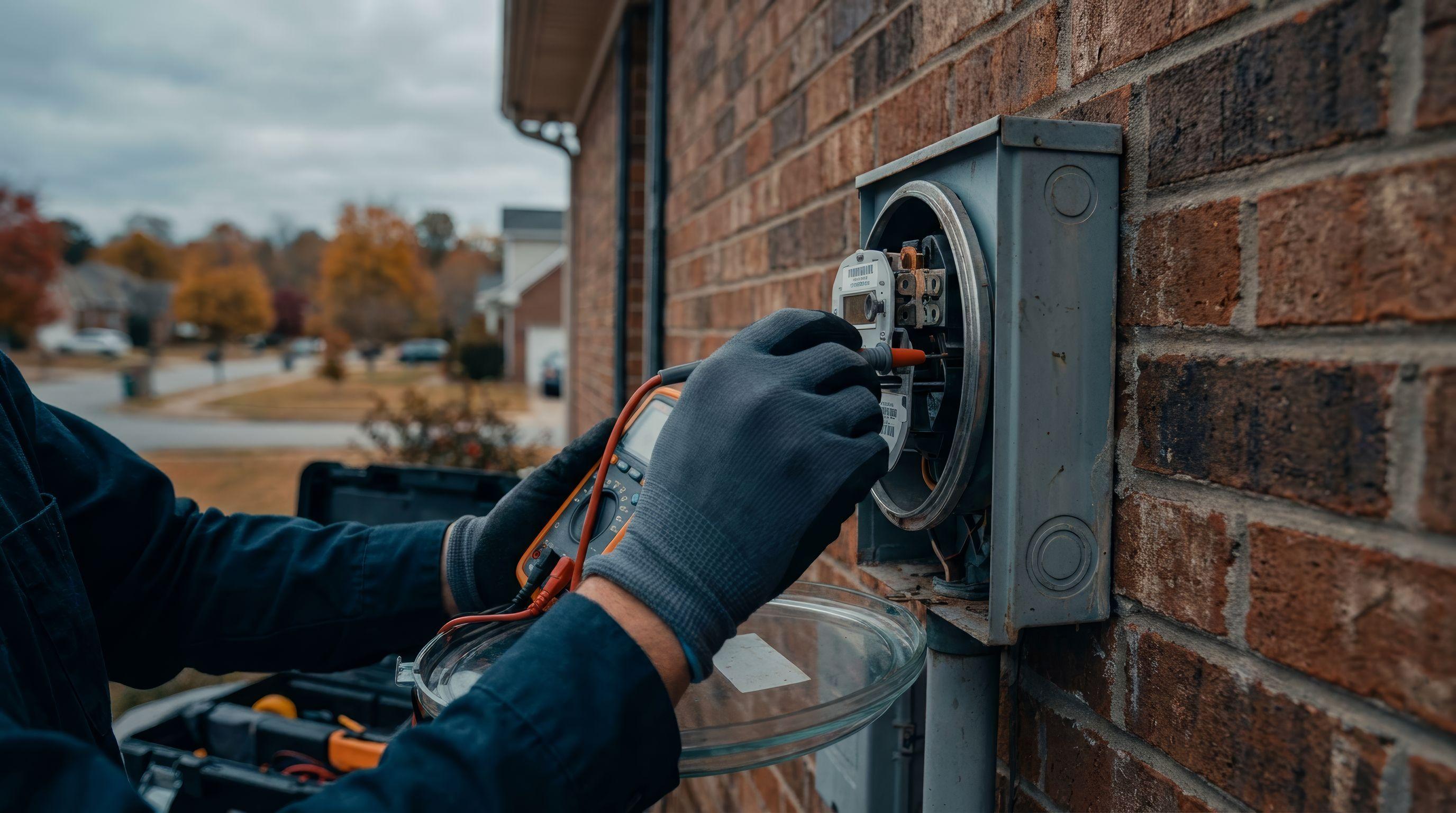
When a storm brings down a tree limb on the wires running to your house, it often does not just pull the line, it damages the mast, weatherhead, or meter base where the service enters your home. This is where many homeowners get surprised: the utility owns and repairs its lines up to the connection point, but the mast, weatherhead, and meter base are the homeowner's responsibility. The utility will not reconnect power until that equipment is repaired by a licensed electrician.
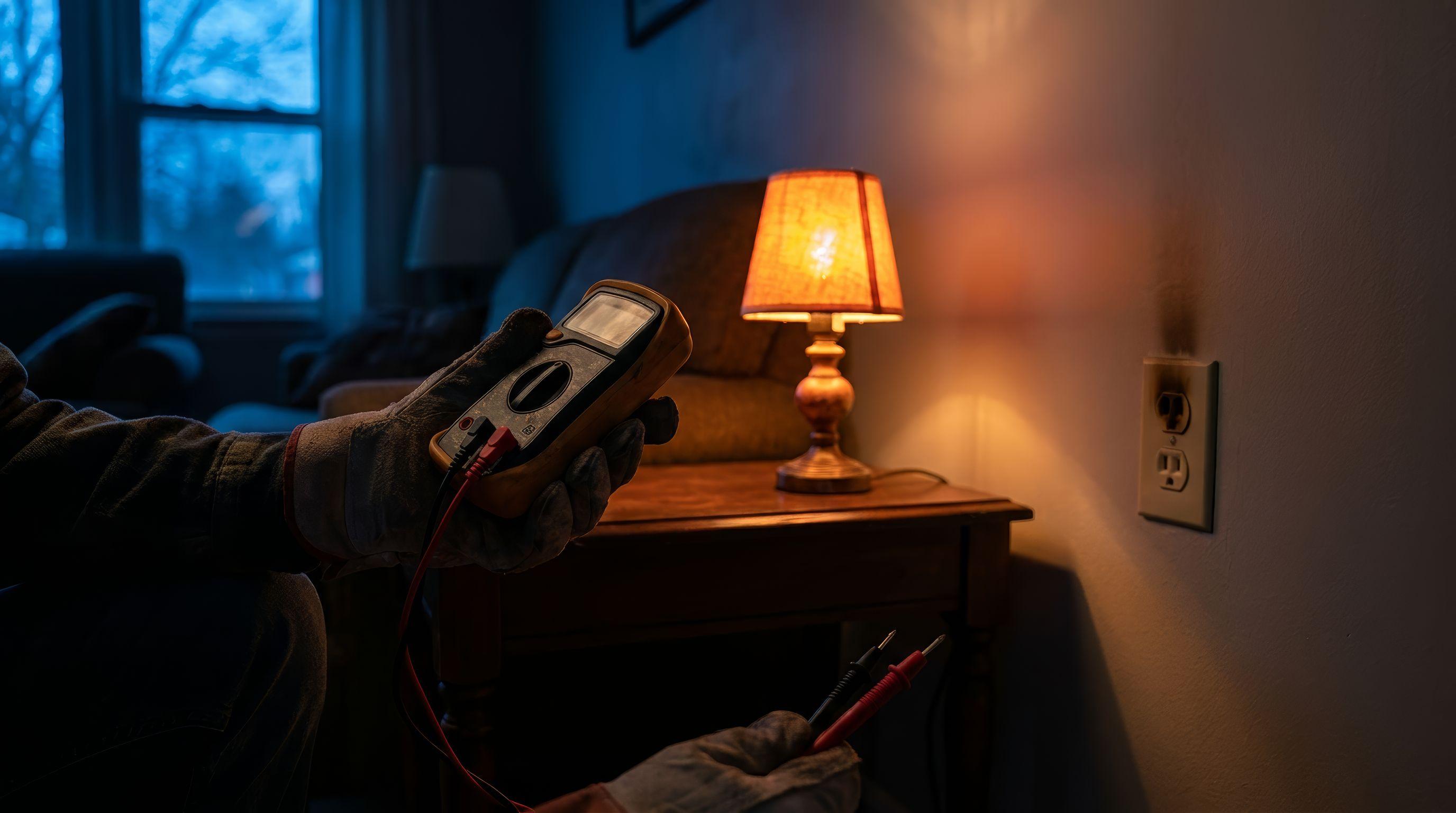
RCC Electric repairs storm-damaged service entrances and coordinates directly with your utility for the disconnect and reconnect, so you are not stuck managing multiple parties while your power is out. We also repair underground service wire damaged by storms, flooding, or fallen trees. Signs your service entrance took damage include a visibly bent or pulled mast, a cracked or hanging meter base, scorching near the meter, or partial power and flickering throughout the house after a storm.
After the storm: what is safe and what is not
Treat every downed power line as energized and deadly, even if it looks dead. Stay well clear, keep children and pets away, and call the utility and 911. Never drive over a downed line. If a line is on your car, stay inside until help arrives unless the vehicle is on fire.
If your panel, outlets, or any electrical equipment has been submerged or rained on, do not energize it, water-damaged electrical needs to be inspected and often replaced before it is safe. And if you run a portable generator during an outage, never plug it into a wall outlet to power the house. "Backfeeding" energizes the lines outside your home and can electrocute a utility worker, and it bypasses your home's protection. The safe way to connect a generator is through an interlock kit or a transfer switch installed by a licensed electrician.
A pre-season electrical checklist
- Install whole-home surge protection at the panel
- Have an electrician inspect your meter base, weatherhead, and mast for corrosion, looseness, or damage
- Keep trees trimmed back from the service drop, and call the utility for limbs touching their lines
- Test your GFCI and AFCI outlets and breakers
- Know where your main breaker is and how to safely shut off power
- If you use a portable generator, have an interlock or transfer switch installed, never backfeed an outlet