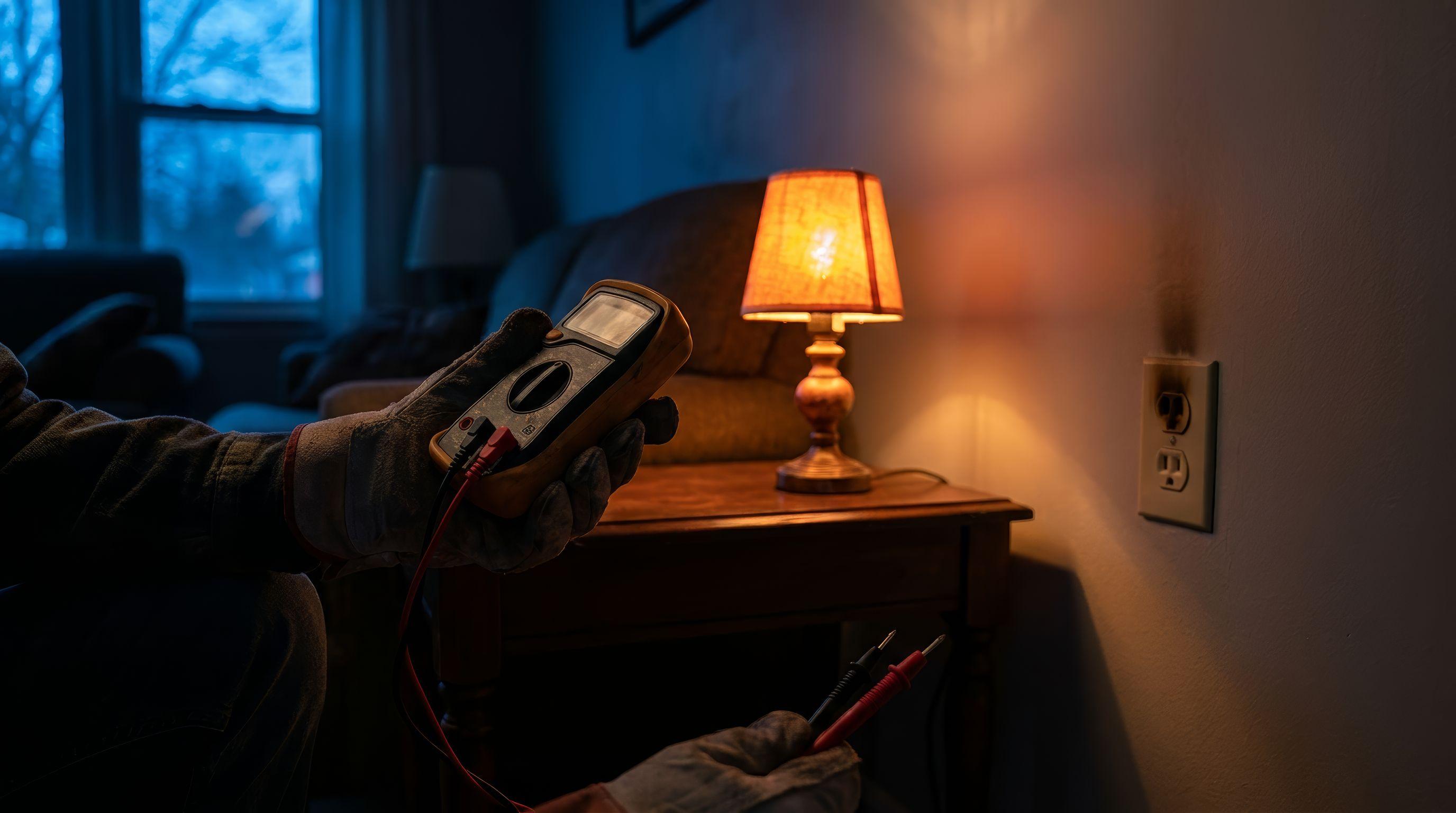
Electrical problems rarely announce themselves loudly. By the time you smell smoke or see a spark, you are already past the warning phase and into emergency territory. The good news is that almost every electrical fire we read about in the East Tennessee news could have been prevented if someone had caught the warning signs earlier and called a licensed electrician.
This guide walks through the ten most common warning signs we see on service calls across Knoxville, Maryville, Oak Ridge, Maynardville, and the surrounding cities. If you have one of these in your home right now, that is a call-an-electrician-this-week situation. If you have two or more, do not wait, schedule it today.
Signs that come from your outlets and switches
Sign one: a warm or hot outlet or switch cover. Run your hand over outlet and switch cover plates throughout the home. They should all feel exactly like the wall around them, room temperature, neutral. A warm cover means a connection is loose somewhere behind that device, generating resistance heat. A hot cover is a fire risk in the very near future.
Sign two: a faint burning smell that has no other obvious source. Burning electrical insulation has a distinctive sharp, plastic-like smell. If you notice it near an outlet, switch, or appliance, and you cannot trace it to anything in the room, get an electrician out before the next use. We have responded to enough "we smelled something for a couple weeks and then it caught fire" calls to take this one very seriously.
Sign three: outlets where plugs fall out or wobble. Modern plugs should fit snugly into outlets and hold their weight without sagging. Loose outlets indicate worn internal contacts, which create arcing and heat under load. This is a $5 part fix that turns into a $50,000 fire if ignored long enough.
Sign four: discolored or visibly scorched outlets. Brown or black marks around the receptacle holes are heat damage. The outlet has already experienced arcing and needs to be replaced, and the wiring behind it inspected for damage.
Signs that come from your lights and appliances
Sign five: lights that flicker when other appliances cycle on. When the refrigerator compressor kicks in and the kitchen lights briefly dim, that is a voltage drop. Mild dimming is normal. Persistent flickering, especially across multiple rooms, indicates either an overloaded circuit, a loose connection in the panel, or a degraded neutral connection, any of which need attention.
Sign six: breakers that trip repeatedly on the same circuit. Breakers exist to trip when there is a problem. Occasional trips are them doing their job. But if the same breaker trips multiple times in a week, or trips every time you run a specific appliance, the circuit is overloaded or has a developing fault. The wrong response is putting in a larger breaker. The right response is figuring out why.
Sign seven: appliances that buzz, hum, or sometimes will not start. Older microwaves and refrigerators are noisy by design, but a sudden change in sound, especially a buzz or hum that gets louder over time, often indicates a wiring issue feeding the appliance, not an appliance problem.
Signs that come from your electrical panel
Sign eight: a warm panel cover or buzzing sound from inside the panel. Open the door of your panel enclosure (the part that swings open without exposing breakers) and feel the inside cover. Warm is bad. A faint buzz is also bad. Both indicate loose connections inside, which generate heat and create fire risk.
Sign nine: a panel labeled Federal Pacific Stab-Lok, Zinsco, Pushmatic, or Challenger. These brands have documented failure modes where breakers do not trip under fault conditions. In East Tennessee in 2026, they are also an insurance problem, many Tennessee carriers now refuse coverage or surcharge homes with these panels. If you see any of these brand names on your panel, an upgrade is no longer optional, it is a matter of when.
Sign ten: a fuse box instead of a breaker panel. Fuse boxes were standard before about 1960. They are not inherently unsafe, but they are dramatically less convenient (you replace a fuse instead of resetting a breaker) and the original wiring in fuse-box-era homes is now 65+ years old. If your East Tennessee home still has a fuse box, a panel upgrade is one of the highest-value safety improvements you can make.
Older East Tennessee homes have specific issues to watch for
If your home was built between 1965 and 1973, there is a real chance you have aluminum branch wiring. The risk is not the wire itself but the connections, which loosen over decades of thermal cycling. We have a separate dedicated guide on aluminum wiring, it is worth reading if your home is from that era.
Homes built before 1950 may still have knob-and-tube wiring in walls and attics. K&T is unsafe primarily because of how it ages: the insulation becomes brittle, splices were originally made in open air (which fails when blown-in insulation is added later), and the system has no equipment ground. East Tennessee has plenty of older neighborhoods, particularly in Oak Ridge's pre-war and Knoxville's historic districts, where partial K&T is still present.
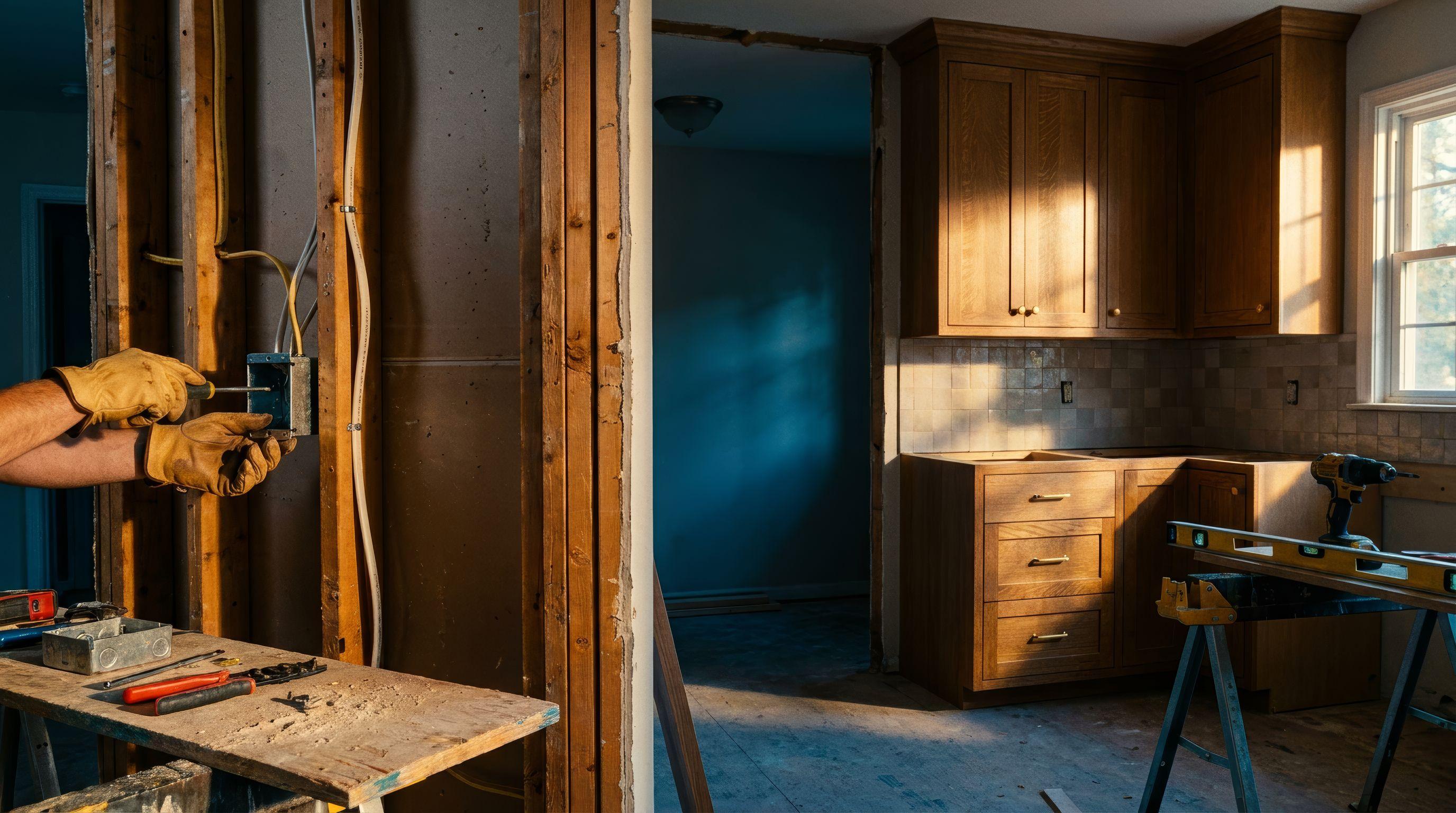
Homes built in any era can have DIY electrical work hidden behind walls. We find junction boxes buried in drywall, splices made with electrical tape instead of wire nuts, and circuits running through spaces they should not. If you bought your home from a previous owner who was "handy," an inspection is worth doing once just to find any surprises.
What an electrical safety inspection actually looks like
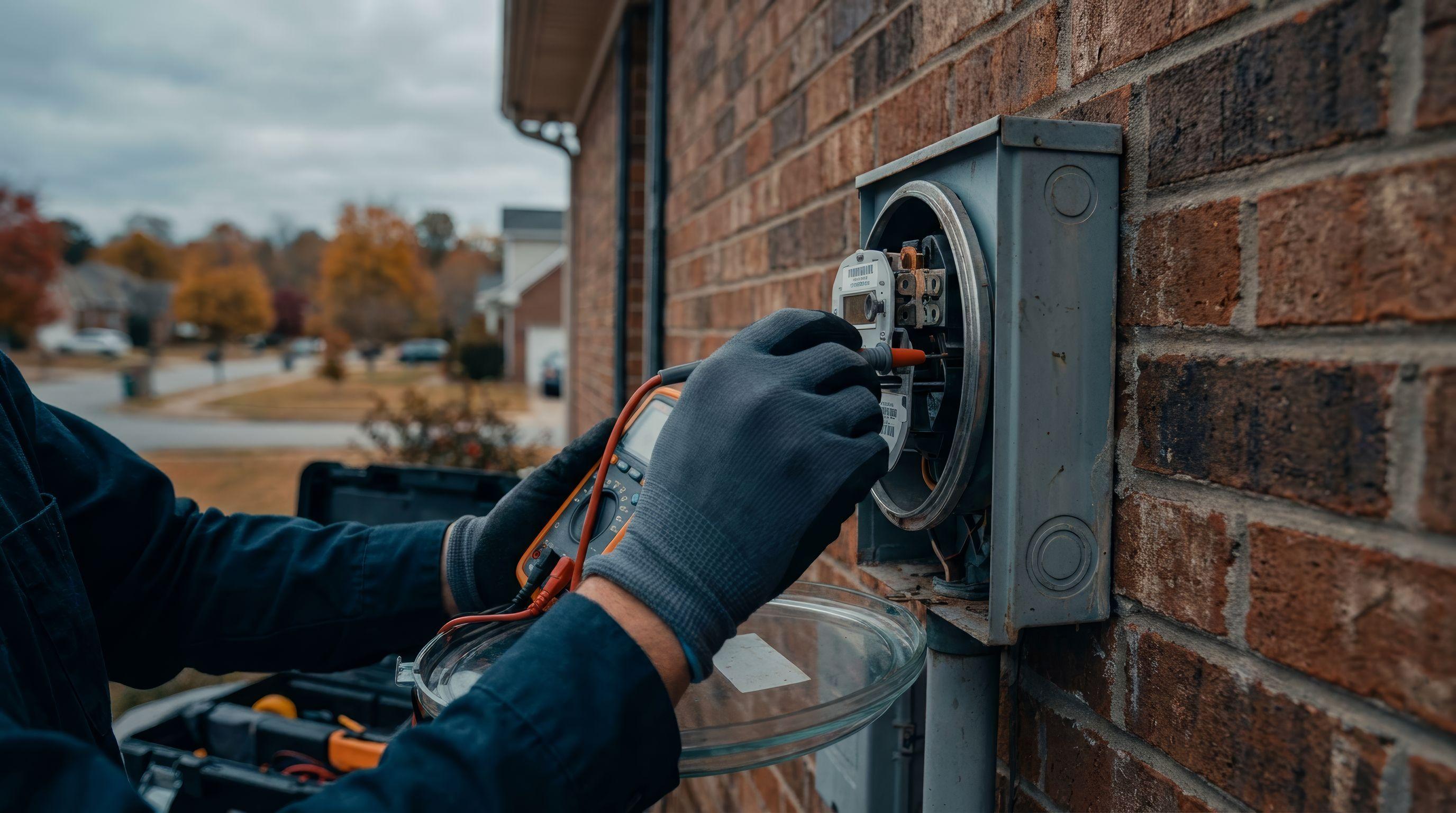
An electrical safety inspection from RCC Electric is a 60 to 90 minute visit. We check the panel (cover off), the meter base, a sample of outlets and switches in every room, GFCI and AFCI functionality, the visible wiring in attics or crawl spaces if accessible, and any older equipment that is still in service.
You receive a written report at the end, what is fine, what needs attention, and what is an active safety concern. There is no obligation to do any of the work with us afterward. About half the inspections we do find nothing significant and we document the home as electrically sound. The other half catch something worth fixing on a homeowner's schedule rather than during an emergency.
Inspections are free for homeowners in our service area: Knox, Blount, Anderson, Union, Campbell, Claiborne, and Grainger counties. If you are seeing any of the ten signs above in your East Tennessee home, this is the lowest-cost, lowest-risk first step.