East Tennessee homes are hard on Wi-Fi. Lake houses on Norris Lake with metal roofs, farmhouses in Union and Grainger County with thick original walls, sprawling ranchers in Farragut, and new builds with energy-efficient foil-backed sheathing all have one thing in common: wireless signals struggle to get through them. If you have ever stood in your kitchen watching a video call freeze, or checked a security camera app only to see "camera offline," you have felt the problem.
The fix usually is not a more expensive router. It is wire. RCC Electric runs Cat6 network cabling and wired security camera systems across Knoxville, Maryville, Oak Ridge, Maynardville, and the rest of our East Tennessee service area, and this guide explains what hardwiring actually solves, what belongs on a cable versus Wi-Fi, and what professional low-voltage work costs in 2026.
Why East Tennessee homes fight their Wi-Fi
Wi-Fi is radio, and radio loses strength every time it passes through framing, masonry, ductwork, or metal. A router in a home office at one end of the house may deliver a fraction of its speed to a bonus room two walls and a floor away. Several building styles common in our area make it worse: metal roofing and foil radiant barriers reflect signal, brick and stone chimneys at the center of older homes block it, and the long, spread-out floor plans popular on lake lots simply exceed the practical range of a single access point.
Mesh systems help by adding more transmitters, but a wireless mesh node placed in a dead zone is receiving a weak signal itself, so it rebroadcasts a weak, slower connection. The premium solution, and the one commercial buildings have always used, is to run cable to where the coverage needs to be. A hardwired access point at each end of the house gives you full-strength signal everywhere, with the heavy traffic carried over cable instead of crowded airwaves.
What Cat6 wiring actually gets you
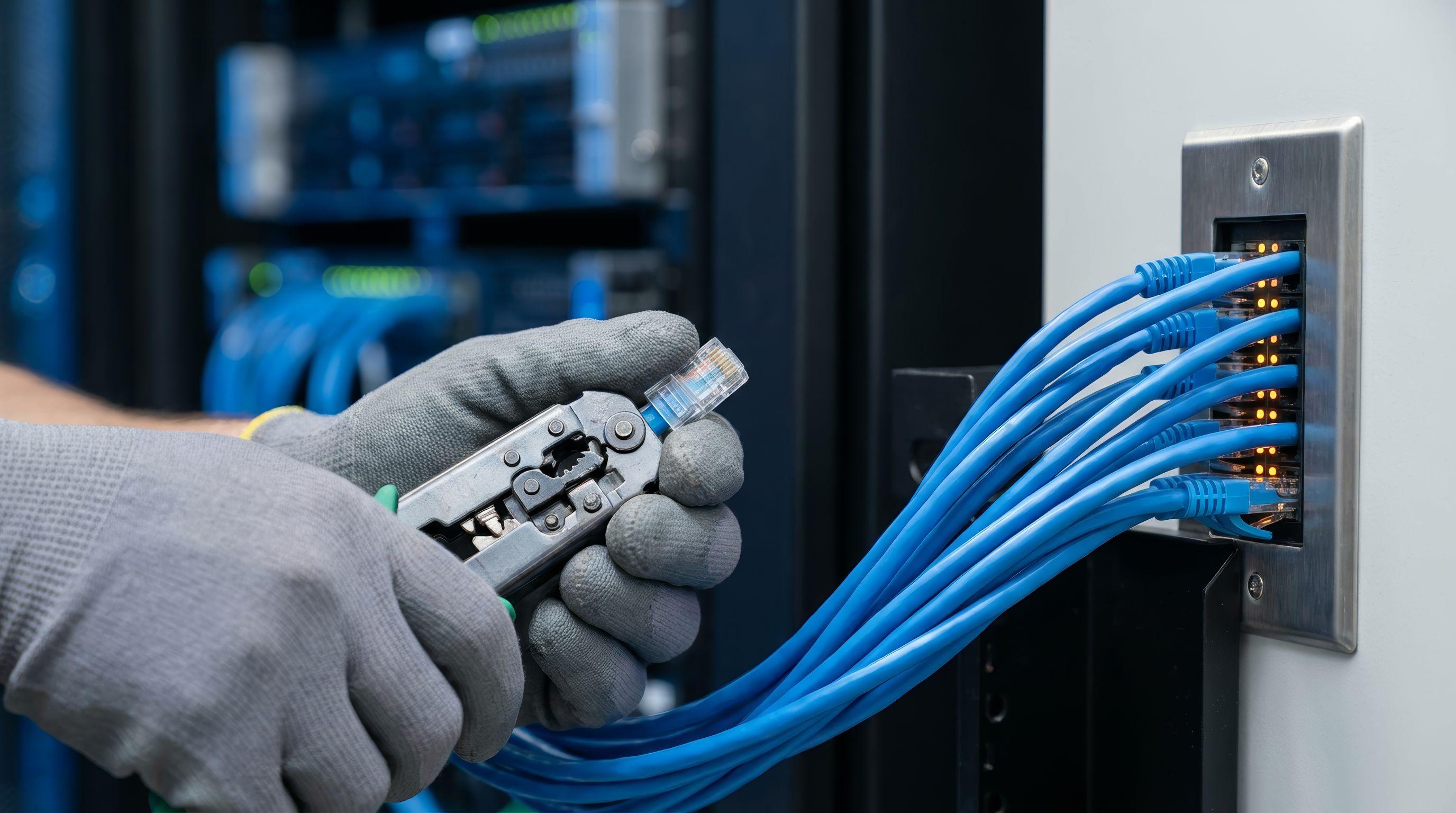
Cat6 is the current standard for residential network cabling. Over the run lengths found in a typical home, it supports up to 10-gigabit speeds, which is faster than any internet plan available in East Tennessee and fast enough to move large files between computers instantly. Unlike Wi-Fi, a wired connection does not fluctuate with interference from neighbors, microwaves, or baby monitors, and its latency is consistently low, which matters for video calls, gaming, and trading or CAD work from a home office.
- Home office: a wired desk connection is the single highest-impact upgrade for anyone working from home
- TVs and streaming boxes: 4K streaming on wire frees up Wi-Fi capacity for everything else
- Gaming consoles and PCs: wired connections cut lag and eliminate mid-game drops
- Wireless access points: hardwired ceiling or wall access points are how large homes get seamless Wi-Fi
- Security cameras and doorbells: wire means they record and alert reliably, every time
A professionally installed Cat6 drop, run from your network closet or panel to a finished wall jack, typically costs $150 to $300 per location in our market, with multi-drop packages priced lower per run. RCC Electric installs and repairs both Cat6 and legacy Cat5 cabling, terminates and tests every run, and labels everything so future troubleshooting takes minutes instead of hours.
Security cameras: why PoE beats battery and Wi-Fi cameras
Wireless security cameras are easy to buy and easy to hang, and that is where their advantages end. Battery models need charging every few weeks and slow down or die in cold snaps. Wi-Fi models drop offline exactly when the network is stressed, and any camera that depends on your router is only as reliable as the weakest corner of your Wi-Fi. For a system you are trusting to watch your home, a dock, or a shop full of tools, "usually connected" is not good enough.
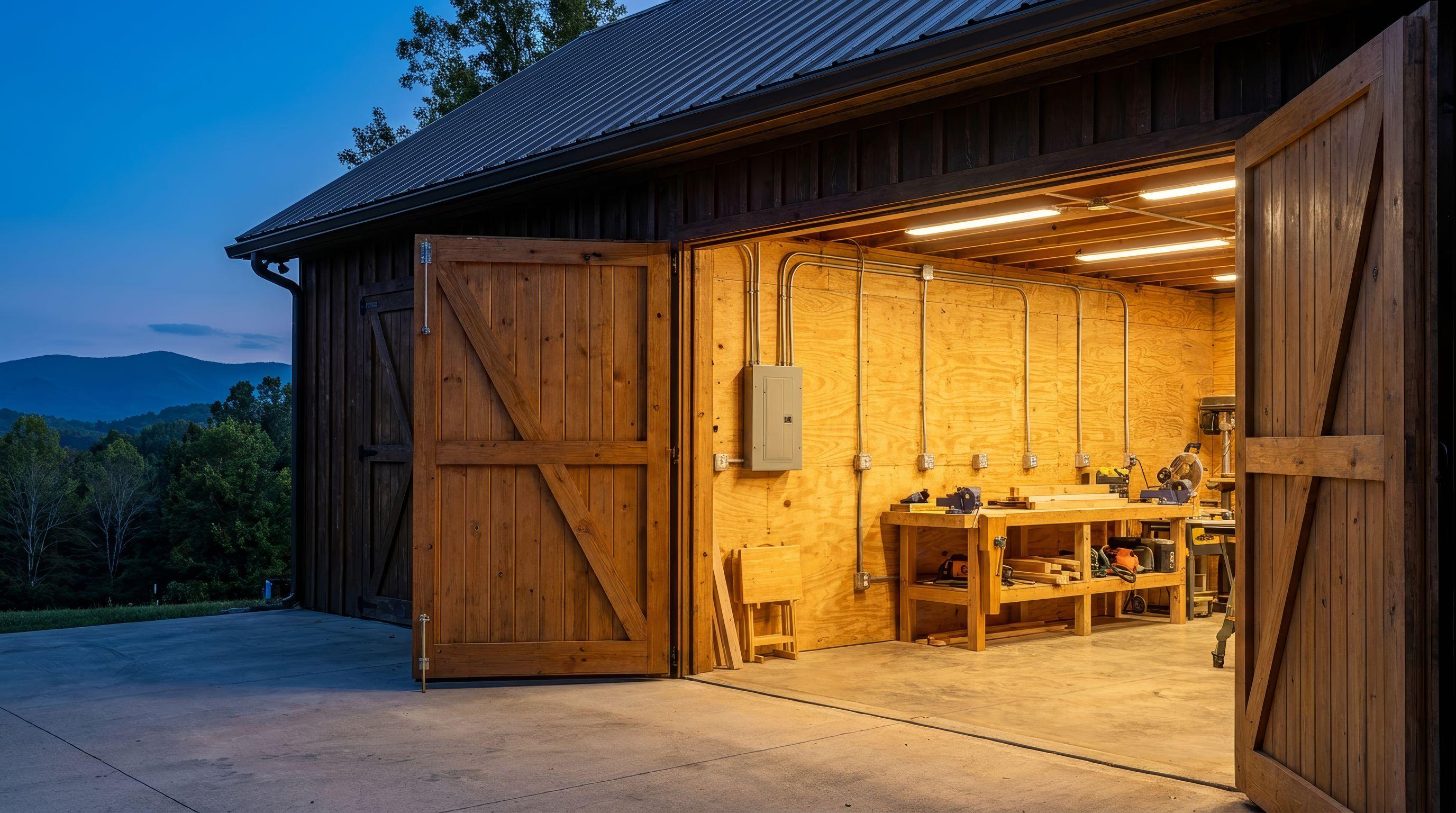
Power over Ethernet (PoE) cameras solve both problems with a single Cat6 cable that carries power and data together. There are no batteries, no Wi-Fi dependence, and no separate electrical outlet needed at each camera location. Footage records continuously to a local recorder rather than depending on cloud uploads, and the cameras keep recording during internet outages. This is the same architecture commercial buildings use, scaled to a home. It is also ideal for the detached garages, barns, and boat docks common on East Tennessee properties, anywhere a camera needs to live far from the router.
The best time to wire is when the walls are open
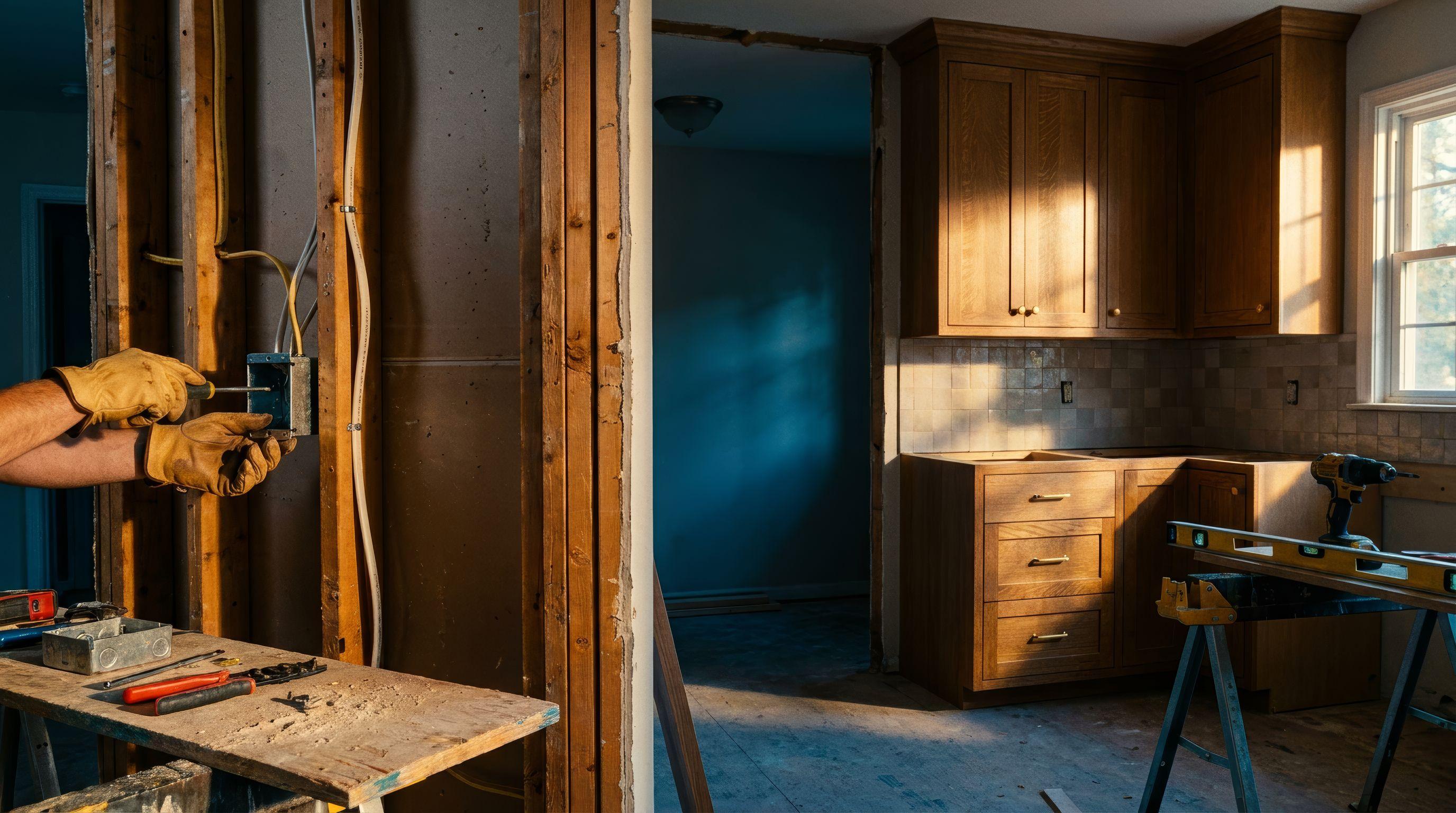
Low-voltage cable is inexpensive; getting it through finished walls is the labor. That is why the smartest time to add network and camera wiring is during a remodel, an addition, or new construction, when studs are exposed and runs take minutes instead of hours. If you are planning a project with us, panel upgrade, remodel wiring, a new detached garage, ask about pulling Cat6 at the same time. The incremental cost while walls are open is small, and it future-proofs the house.
In finished homes, we fish cable through attics, crawl spaces, and wall cavities, which is very doable in most East Tennessee construction, ranchers and homes with basements or crawl spaces are the easiest. We treat finished spaces with care, keep openings minimal, and patch access points cleanly.
What professional low-voltage work costs in 2026
- Single Cat6 drop to a finished room: $150 to $350 depending on run difficulty
- Whole-home package of 6 to 8 drops plus a wall-mounted network panel: $900 to $2,000
- Hardwired wireless access point, installed and configured: $250 to $500 per location
- 4-camera wired PoE security camera system, installed with recorder: $1,200 to $2,500
- 8-camera PoE system for larger properties or small businesses: $2,400 to $4,500
- Cat5/Cat6 repair, re-termination, and testing of existing runs: $100 to $250 per visit
Every job includes clean terminations, testing of every run, and labeling at the panel. Because RCC Electric is a licensed electrical contractor, not just an installer, we also handle any line-voltage work the project needs, a new outlet for the network rack, power to a detached building, or a circuit for the recorder, in the same visit.